Photo: Chinese Mountains
Mount Kailash
Gang Rinpoche
The most sacred mountain on Earth — worshipped by a billion people, climbed by none
About Mount Kailash
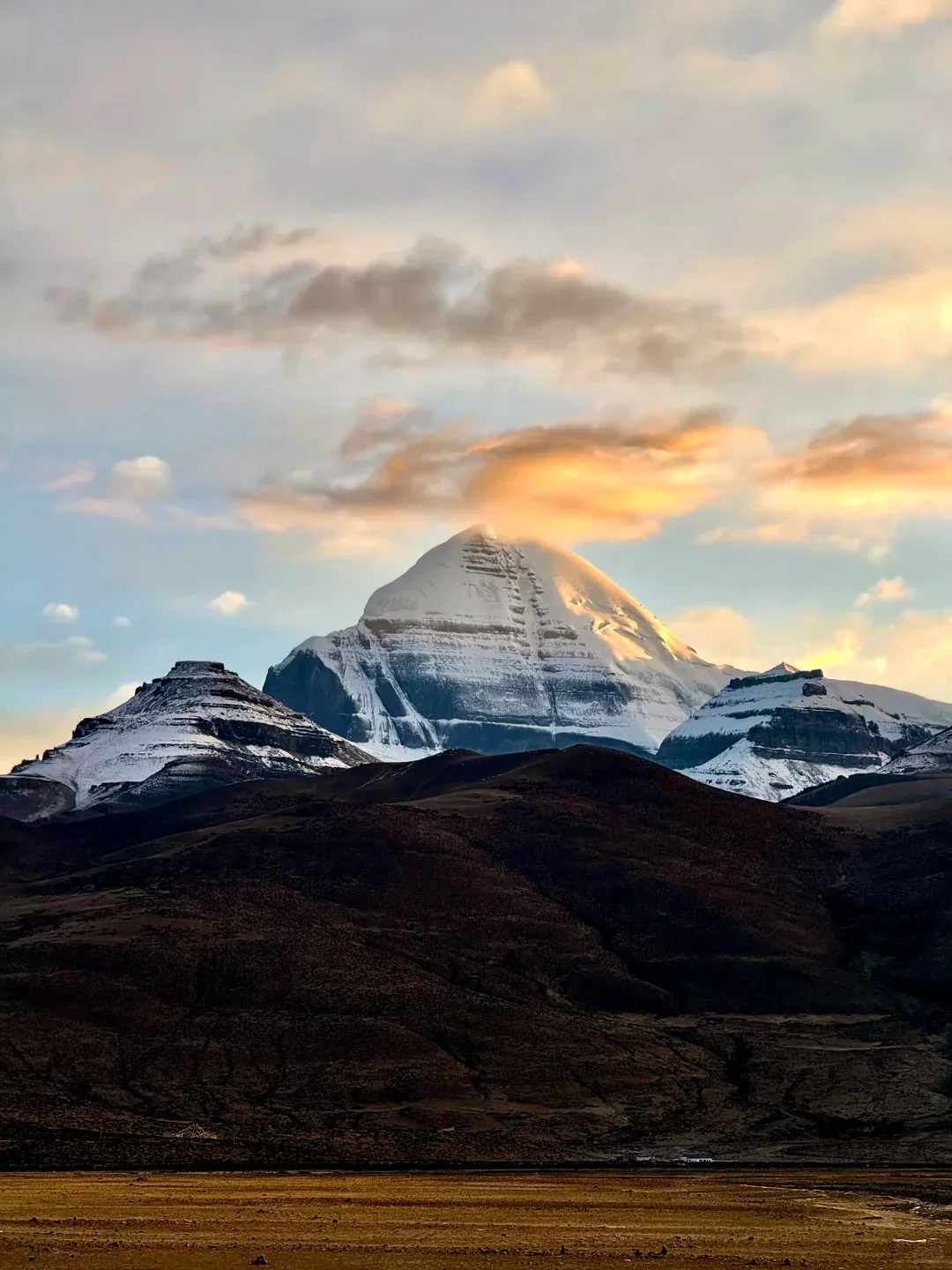
Mount Kailash stands alone in western Tibet, a black pyramid of rock and ice rising from the Tibetan Plateau. No climber has ever stood on its summit — not for lack of ability, but because it is considered too sacred to touch. For centuries, pilgrims have walked the 52-kilometer kora around its base, believing a single circuit erases the sins of a lifetime. The mountain’s four nearly symmetrical faces align with the cardinal directions, a geological coincidence that has fueled its mystique for millennia.
Mountain Facts
Cultural Significance
Sacred to Buddhism, Hinduism, Jainism, and Bon — the axis mundi of four religions. The 52km circumambulation (kora) is one of the world’s great pilgrimages.
Highlights
- • 52km kora trek around the entire mountain
- • Dolma La Pass at 5,630m — the kora’s high point
- • Lake Manasarovar, one of the highest freshwater lakes on Earth
- • Sunrise reflections of Kailash in Lake Manasarovar
- • Tibetan Buddhist monasteries along the kora route
When to Go
May-June and September-October: The kora is only passable in these windows. July-August brings monsoon rain and mud. November-April the pass is snowed shut. Acclimatize in Lhasa (3,650m) or Darchen (4,575m) for 2-3 days before starting. The kora takes most people 3 days with overnight stays at Drirapuk and Zutulpuk monasteries. Altitude sickness is the primary risk — the entire walk is above 4,500m with the pass at 5,630m.
How to Get There
The journey is an expedition in itself. Fly to Lhasa, then drive 4 days via the G219 highway through Shigatse and Saga, or fly to Ali Kunsha Airport (NGQ) and drive 5 hours. Most visitors join organized tours that include the Tibet Travel Permit, transport, and guide. Independent travel to Kailash requires the same permits plus substantial planning. The nearest town with basic services is Darchen.