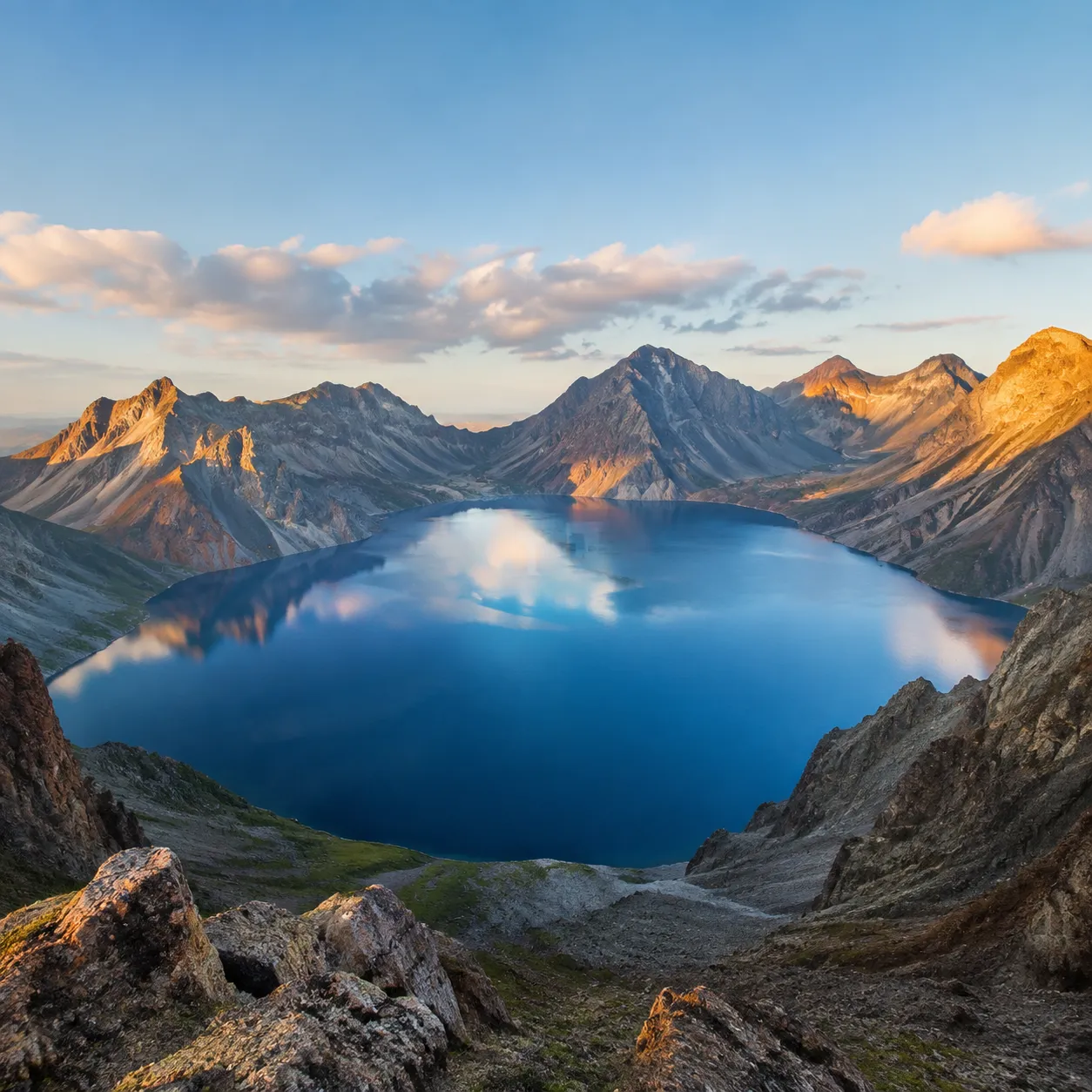
Photo: Chinese Mountains
Changbai Mountain
Changbai Shan
A volcanic crater lake on the China-North Korea border — Heaven Lake at 2,189m
About Changbai Mountain
Changbai Mountain is a massive stratovolcano straddling the China-North Korea border, with its 2,744-meter summit holding Heaven Lake — a stunningly blue crater lake that freezes solid for half the year. The mountain is the spiritual homeland of the Manchu people and a sacred site in Korean mythology. Unlike China’s granite and karst peaks, Changbai is a fully volcanic landscape with hot springs, waterfalls, and alpine tundra. The north slope (Chinese side) offers the best lake views via a paved path to the crater rim.
Mountain Facts
Cultural Significance
The largest and highest volcanic crater lake in Northeast Asia. Sacred to both Chinese and Korean cultures for millennia.
Highlights
- • Heaven Lake (Tianchi) — a 10km-wide volcanic crater lake
- • Changbai Waterfall, 68m cascade from the lake’s only outlet
- • Underground Forest — a sunken valley with ancient trees
- • Hot springs at 83 C, with eggs boiled in geothermal pools
- • Alpine tundra blooms in July with wildflowers at 2,000m+
When to Go
July-August is peak season for reliably seeing Heaven Lake — the crater is notorious for fog that obscures the view 250+ days per year. September brings autumn colors to the lower slopes. Winter (December-February) transforms the waterfall into a frozen cascade and the lake into a white expanse, but temperatures drop to -40 C. The mountain is closed to the summit rim in deep winter conditions.
How to Get There
Fly to Changbaishan Airport (NBS) from Beijing (2h) or Shanghai (3h), then take a 1.5-hour bus to Erdaobaihe town. Alternatively, take a high-speed train to Dunhua or Yanji and connect by bus (3-4 hours). From Erdaobaihe, shuttle buses run to the North Slope entrance daily. The North Slope is the most developed and offers the most reliable lake access.