About Changbai Mountain
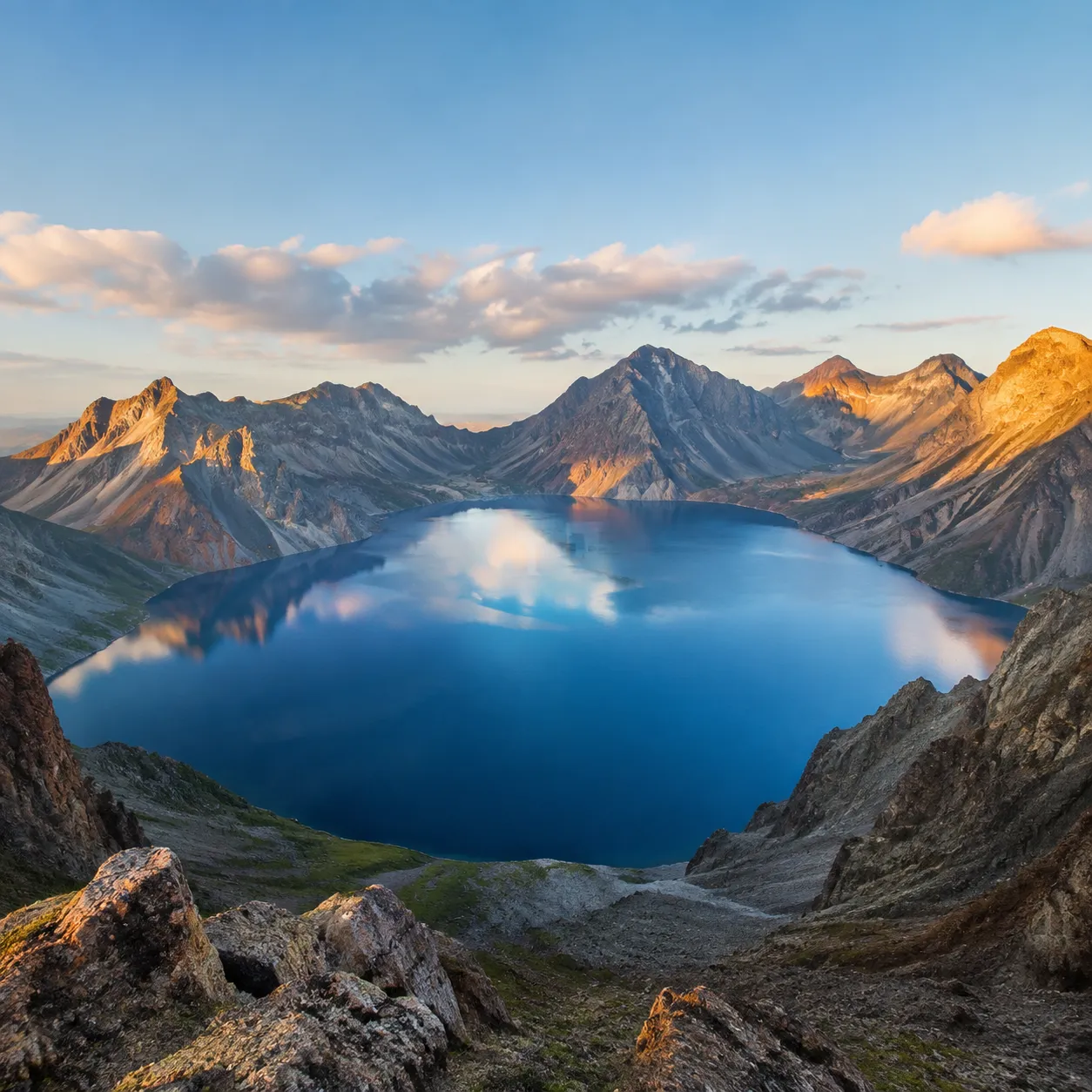
Changbai Mountain is a massive stratovolcano straddling the China-North Korea border, with its 2,744-meter summit holding Heaven Lake — a stunningly blue crater lake that freezes solid for half the year. The mountain is the spiritual homeland of the Manchu people and a sacred site in Korean mythology. Unlike China’s granite and karst peaks, Changbai is a fully volcanic landscape with hot springs, waterfalls, and alpine tundra. The north slope (Chinese side) offers the best lake views via a paved path to the crater rim.
Mountain Facts
Protected Area
Changbai Mountain Reserve
UNESCO Status
Not designated
Our Ratings
Scenery 4.5/5 · Hiking 3/5 · Culture 3.5/5 · Access 4/5
Cultural Significance
The largest and highest volcanic crater lake in Northeast Asia. Sacred to both Chinese and Korean cultures for millennia.
Highlights
- • Heaven Lake (Tianchi) — a 10km-wide volcanic crater lake
- • Changbai Waterfall, 68m cascade from the lake’s only outlet
- • Underground Forest — a sunken valley with ancient trees
- • Hot springs at 83 C, with eggs boiled in geothermal pools
- • Alpine tundra blooms in July with wildflowers at 2,000m+
When to Go
July-August is peak season for reliably seeing Heaven Lake — the crater is notorious for fog that obscures the view 250+ days per year. September brings autumn colors to the lower slopes. Winter (December-February) transforms the waterfall into a frozen cascade and the lake into a white expanse, but temperatures drop to -40 C. The mountain is closed to the summit rim in deep winter conditions.
How to Get There
Fly to Changbaishan Airport (NBS) from Beijing (2h) or Shanghai (3h), then take a 1.5-hour bus to Erdaobaihe town. Alternatively, take a high-speed train to Dunhua or Yanji and connect by bus (3-4 hours). From Erdaobaihe, shuttle buses run to the North Slope entrance daily. The North Slope is the most developed and offers the most reliable lake access.
Frequently Asked Questions
Can you really see North Korea from Changbai Mountain? +
Yes. Heaven Lake straddles the border — roughly 60% is in North Korea. From the Chinese side viewing platform at the crater rim, you can clearly see North Korean territory. Border guards are present but unobtrusive. You do not need a special permit for the Chinese side.
How likely am I to see Heaven Lake? +
About 30-40% chance on any given summer day. The crater creates its own microclimate — fog can roll in within minutes. The best strategy: arrive at the park entrance by 7:00 AM, take the first shuttle to the summit, and if foggy, wait 1-2 hours. Conditions often clear by mid-morning. September has the highest success rate for lake visibility.
Is Changbai Mountain suitable for families? +
Absolutely. The North Slope has paved paths, shuttle buses, and minimal elevation gain after the bus drops you near the summit. The walk to the crater rim viewpoint is about 1,500 steps on wooden boardwalks. The Underground Forest is a gentle 1-2 hour walk through ancient trees. Hot spring pools near the entrance are family-friendly.
What is the best season to visit? +
July for wildflowers and the highest chance of lake visibility. September for autumn colors on the lower slopes with still-reliable weather. January-February for the frozen lake and ice waterfall — spectacular but requires full winter gear and may involve closures during heavy snow.
How do I get from the park entrance to the lake? +
Shuttle buses from the North Slope entrance take you to the transfer station, then another bus to the summit parking area. From there, it’s approximately 1,500 wooden steps to the crater rim. The buses are frequent and included in the ticket price. Total transit time from entrance to crater rim: about 1-1.5 hours including waits.
Are there accommodation options near the mountain? +
Erdaobaihe town has hotels ranging from budget guesthouses to five-star resorts with hot spring baths fed by the mountain’s geothermal water. Staying in town means a 30-minute drive to the park entrance. Some hotels inside the reserve offer a more immersive experience but book out weeks ahead in summer.
What wildlife might I see? +
Changbai is one of the few places where wild Siberian tigers and Amur leopards still roam at lower elevations, though sightings are extremely rare. More common: sika deer, wild boar, red squirrels, and over 200 bird species including black-billed capercaillie. The alpine zone hosts hardy plants adapted to the brief summer growing season.